Tuesday, 18. November 2008

PUTTING THE 'WE' INTO WEBLOG - AN ANALYSIS OF GROUP IDENTITY PROCESSES IN THE INDONESIAN BLOGOSPHERE


blog_end1

The paper has been finally completed and will be made available for download here shortly.

Thanks to everyone who has helped me out and given their advice and knowledge.

Monday, 27. October 2008

27.10.2008

DEAR INDONESIAN BLOGGERS!

SELAMAT HARI BLOGGER NASIONAL

:)

Monday, 8. September 2008

Part 6 of the interview series: MUHAMMAD THAMRIN - THE POLITICAL BLOGGER

Thamrin is a historian and journalist, currently works for the Friedrich Naumann Stiftung in Jakarta - a German political foundation associated to the German Liberal Party (FDP) - and as a freelance journalist.

He is involved in the Friedrich Naumann Stiftung Project ‘Blogging for Democracy’ – a series of workshops with politicians and NGO workers to introduce them to the world of blogging and podcasting/videocasting. He also writes his own blog called ‘Other stories about freedom’ and initiated ‘Kedai Kebebasan’.


thamrin
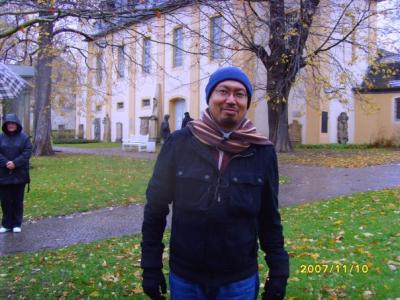
Mr. Thamrin, here not in Jakarta, where I spoke to him in a Café in the Kemang area, but from what it looks like somewhere in Europe


Personal background in blogging

My first time getting in touch with blogs was in 2006. I was told by one of my friends. I had my first blog at blogspot. At first there were technical difficulties, I didn’t take it so seriously. Then I participated in a workshop in the Philippines, I was invited with the FNS staff to go there. A three-day workshop. They introduced me to a simple type of blog software, wordpress. I created a simple blog in this workshop, which I still use today. I found this easier than blogspot, although blogspot has become more user friendly today. The workshop enlightened me. Aside from blog, they also introduced me to podcast.

I blog from work, home, or even when I travel. I also take care of our office website. Priority is the office website… so the blog I do normally at home. I use dial-up.

My background is journalism. So writing is an everyday thing for me. And I had the experience with the office website for a long time. But sometimes you have some personal things you want to write which can’t be put on the website. The website should be official – you can write an opinion – but sometimes you want to write with an informal language, very simple, short, then I find a blog is the best to write something like that. When you want to write about your feeling, you want to criticize somebody, you can do that on your blog, you can’t do that on the website. I’m working for a political foundation, so everything has to link to that.

The readers will come with or without your call, based on the topic they’re interested in. I mostly write about public services, political economy, political parties, democratization, corruption. I used to work for Indonesia Corruption Watch and the articles that are most frequently visited arte the ones about corruption and good governance. I use tags. I put tags like good governance, corruption, and when ppl search on google, they will find me. I think they find the articles because they are interested in these topics.

I´m happy some of the articles are used by readers as university reference, or even in highschool. Then they leave a message: thanks, because I`m using this article for my background… I think they respect my opinion because of my professional experience, maybe.

I also try to make links, to other people’s blogs. This is a way to promote your blog. If you visit other people’s blogs, leave comments, then you can leave your address to your own blog too. This is kind of an unwritten code. If I know your blog from your trackback, I will have a look at your blog to see what you have to say. This is how you generate your network.

Blogging culture in Indonesia

I think blogging is a kind of popular culture. Not only blog, but also podcasts or vcast. It´s a kind of trend, I think, because everyone is talking about it. If you want to have a network, you have nice pictures, you put it into friendster. But now if you have nice pictures or films, you just put it on a blog. You don’t even need to write anything. It’s what’s popular now. I’ve seen that a couple of times.

The thing is with blogs, if you write about politics, economics, good governance, corruption, they way you link will indirectly be in this community. It’s really rare that some people who normally put, like, underground pictures on their blog, and are really young [come to my blog], but sometimes 1-2 of these blogs have visited me and I went back and I found these types of blogs. They only put copy of music, though it’s illegal, they put MP3 in their blog, photos, or they link to youtube…. But on the other side I think it’s more people who want to say something. They want to complain about public service, complain about transport system, about religious things or they want to write something about cooking, healthcare, family, things usually not have an access to mainstream media. Maybe because they are not acknowledged as a good writers. In the formal media you have to have a good background to be accepted. But maybe they want to write. They have found a way for their aspirations to write in their blog.

Also in connection to this, aspirations and culture, is the mushrooming of the internet warung. If you don’t have internet at home, or at the office, you can go to the warnet or, especially now, to the cafés that provide hotspot. I think this is the reason why it became popular.

In addition to that, since 2006, I think some of the famous government people, like from the ministry, have a blog. So blogging is now a style from the young to the very top politicians, like Wimar Witoelar, SBY, Yussuf Kalla… oh, if they have a blog, why don’t have one?

Freedom of opinion


But the biggest reason for blogging is, they can write anything in their blog, without censorship. You can write from radical things, like against Israel, radical Islam, until to the topic of riding bicycles to the office. You can write anything in blogs and this makes it more and more popular.

The ministry of information and telecommunication supports us. The government still allows blogs, also some of the big media provide blogs, kompas has a blog, tempo magazine online has a blog… this will become more and more.

Minister Nuh’s Role at Pesta Blogger? I think they want to show to the media or to the people that the government gives you freedom to write or to give a comment or to criticize. I think this is in line with SBY himself who has his own blog. Also SBY never gave pressure to the media even if you criticize his cabinet or government, in written text or programs in television, he never gave pressure. This is the policy of the government. Also I think the government and also the ministry doesn’t want to get into problems. You know if they make prohibition, then it’s also they have to control SBY’s blog himself. It’s in the policy of the government giving people freedom to express their political ideas, opinions, everything.

When Gus Dur was president, he closed the ministry of information. It was one of the tools of the government, like a PR for the government. They closed the department and most of the offices in the provinces and kabupatens.

Megawati was the one trying to put a new ministry on information and technology. I think this most likely dealing with things related to information technology, telecommunication lines, broadban for radio and television, regulating the channels and also the space of television and radio. But they are not related to the contents. This is the difference. They are not dealing with the content. The ministry or department is dealing with infrastructure or technical side of communication. This department will act if you will monopolize a line for television or radio, or they act if you monopolize the license for TV and Media. But they will not control what you write and send.

Blogging for democracy

About blogging for democracy: we had several workshops in Jakarta three times in Jakarta and once in Semarang in central Java. We always offer it to our political party contacts, that we provide capacity building for blogging and podcasts. They ask us to have this training. There are many requests for having blog training, they see it´s a modern technique to reach their constituents. Sometimes we have a problem to find a place where we can conduct the training. If the participants are 15, we have to provide 15 computers and access. There are not so many places like that in Jakarta. Maybe the universities, also in interent service stations, they provide, but we have to manage it that the cost is not so expensive. By renting the computers it will be too expensive. We experience having the workshop in the internet café, it really cost us a lot. Then we have the experience of having it in the office of the party, there we could reduce part of the cost. Not all the political parties have good computers and internet access. We have many programs and we have to divide the budget. There are many requests, not only from the headquarter but also from the provincial level. Usually we provide the trainers and the computers and the party provides internet access, food.

From 15 people at the workshop, maybe only 1 or two continue blogging. Sometimes they come from a different background. Maybe they are good in speaking but not good in writing. Then they feel like they can’t write. This is the first handicap. The second is, they are not really familiar with internet and computer things. Even in one of our workshops, we had to teach how to login into the email. How to make an email account. How to upload… they are really interested during the workshop, but after the workshop because they have many activities, and they are not familiar with it, they don’t have a computer at home, they don’t have internet at home… so after the workshop, they don’t continue.

They understand that this is the kind of modern technique to reach constituents to know their ideas and opinions. But there are many problems like I cannot write, don’t have computer or internet connection. Sometimes they get other people to write. This is typical for Indonesian politicians. Maybe sometimes they become involved in politics from different backgrounds. Sometimes from being famous in society, even only with elementary school background, come into politics. Not all of them understand and are familiar with communication technologies.

With some political parties these kind of problems don’t really matter. Like in PKS, most of them have a university background, very intellectual, they are familiar with the internet. But we are not dealing with this party. This is the policy of the foundation. Like PKP, PDIP, they are not very familiar with this. PDIP only recently got their website. With PAN, they are familiar with this, they have internet at their office.

They start to realize how important the modern communication technologies are. Maybe not the blogs, but at least websites. Now PKP, PDIP have a good website. When we advise in bloggin and podcasting, we advise them not only to do that but also their website. We conducted a survey of the websites of political parties in 2007 and most of them are not really updated and not complete in providing information like constitution of the party. So in these things we advise them, with a good website providing all information, people will know you as a party and your objective. Then if you have a blog, you as a person who is involved in the party will be known by the constituents, you are the one who are a good candidate for instance.

Other efforts to promote the spread and use of internet

I don’t know the digital divide project. I know Internet Masuk Desa. Internet goes to the village. I don’t know if it’s related to it. Until the village level, the government office should have a link to the internet. The idea is to get computers go to the school, until the village level, elementary school in the village. It’s a government program, supported by Microsoft. With the Habibie center I don’t know. I heard about a program by Dell, providing a cheap laptop, the 100 Dollar laptop.

Of course, there will also have to be a policy of training and education how to use these technologies. That’s also needed because if you have connections and computer and you can’t use it to maximize the computer, it’s useless.

In the city this is happening, also some big cities in the province, but not until the rural area. Some schools, related to the education sector, have some good facilities. In the rural areas, the warnet is the way for the young people how to learn to use the computer, if they don’t have it at school. The young people learn it there, in their own time.

Internet infrastructure

The thing is it’s not only the duty of the government. if the government wants to be faster with internet connections to the village, they should allow private companies to be involved. But right now the fixed line is monopolized by Telcom. It’s a government company. Although it is privatized, most of the shares belong to the government. So it’s always inline with the government policy. If there is a private involved, they only build the line, but not the connections. The services will be managed by Telcom. I think if the government wants to be faster in this sector, they should allow not only building the infrastructure but also the services. But on the other side, the cell phone technology becomes cheaper. The government should encourage the private sector to be involved. I don’t know how far the government will allow. On the other side, they want to extend or they want more people to have access to internet. If the government provides a good policy on this sector, I think some privates will go in this sector.

Now the cell phones also reach until the village. Sometimes in the village, people will have two telephones. I think this is the first step where people realize information is important. Information and communication. After that the next step is the internet. Get an access, get information, something that is not provided in school. People want to know everything. Also aside form the telecommunication systems, computers become cheaper. You can get a PC for thee million or 4 million with internet access. People are thinking now: I have a computer, I have a telephone access, why am I not using it for internet access? They don’t only want it for information, but also to do business at home, not only having internet but having access to clients.

The only thing is the speed in that what people need for information is not the same as the speed of the government providing access. Again if you want to have access to the internet, you have to go through Telcom. This is the cheapest. But there are not so many investors who are interested in investing in this because of the regulation itself. You have to cooperate with Telcom. If the government deregulates the sector, it will become more and more. Even now with the Flexy thing, you buy the pulse and you connect to the laptop, that´s already something. More and more people use internet. I think it will be more if the government provides proper policies in these telecommunications. If you read the newspaper, more real estates, hotels, housing complex, apartments, are offering hotspot, or internet connection, as one of the services. Internet is becoming like a additional value if you want to sell something. Like now in the café, providing hotspot, hotel providing hotspot. They know people are now more and more looking for the internet connection.

Unlimited access


I think the condition up to now, not banning or limiting anything on the blogs, also providing good infrastructure and regulations for access, this will help the blogosphere in Indonesia to grow and flourish. Also if the computers become cheaper and cheaper.

The threat may come from fundamentalist views. Or more and more young people getting access to pornography and betting. This may be a threat. But at home, you can limit access to certain addresses by using software. So this is a matter of choice. But you can’t stop everything. Young people have many ways too get access to what they’re interest in. So it is a matter of education. Even if you educate them, they can still go to these sites. It becomes a matter of choice. But it should not be limited by the government. The government should not limit the people to choose. The government, the society and family should be involved in the education and should make awareness and understanding how to use internet to the young generation. The situation now is asking the government to limit internet access. Also in the blog content itself there is a threat of fundamentalist campaigns, against USA…

There was a case of someone who put SBY’s or someone’s photos in their blog and they got arrested. But this is not about the blog, it was because of the manipulations he did on the photos. The trial was about the photos that got manipulated, not about the blog as a medium.

If there is a threat against someone, their individual rights, then maybe the government should do something, but this is not related to using internet. People should be free to write anything, unless it’s against the constitution or against individual rights. But not the use of the internet itself. Not blocking all the access in Indonesia to certain sites. If they want to limit people’s access to dangerous sites, it should not be by policy by the government it should be a policy of the individual or the family.

Friday, 15. August 2008

Of numbers and users


25million

Numbers are always fascinating, especially to researchers, because they seem so reliable and definitive. It's time to have another look at current internet user statistics in Indonesia.

The latest APJII figures (counting up to the end of year 2007) estimate 25 Million internet users in Indonesia. That makes about 10% of the population.

Of these 25 Mil., only 2 Million (8%) are actual subscribers to an ISP. Hmm. The remaining 92% then must be made up of an estimate of multiple users (at home, office, school/university), warnet/wifi users and GPRS /3G users. (unfortunately, APJII doesn't publish the details of this estimate)

As a comparison: in Germany, where about 60% of the population are online, ONLY 5.1% of internet users DO NOT have internet service at home. (This comes from a survey of tns infratest and the D21 initiative)

The figures clearly point to the persistently high importance of the warnet/internet café for Indonesian internet culture, as well as mobile internet services. Perhaps it's this technology that is most useful for Indonesia at the moment, where the special geography makes the progress in establishing a broadband cable network that reaches the outer ends of the archipelago slow.

As Reuters reports in June this year, Indonesia is the fastest growing market for 3G technology in South East Asia. With around 16.3 Million subscribers. The operators are Telkom Flexi (PT Telkom), StarOne (Indosat), Smart Telecom, Fren (Mobile-8 Telecom), Esia (Bakrie Telecom) and Ceria (Sampoerna Telekomunikasi Indonesia or STI). Do these make up the rest of the total 25 Million?

I'm not a numbers person. Numbers confuse me. 16.3 Million seems to be a lot, and Indonesia is the fastest growing market in SEA?! What I make of it is this: Indonesians want to be online, and they want it to be affordable and flexible. They don't want to wait for the colossal Palapa Ring project to be completed to get online. Mobile services might be the way t go.

Monday, 4. August 2008

Part 5 of the interveiw Series: HANNY KUSUMAWATI - THE PRODUCER

Hanny personifies the female multitasking talent. She was the project manager of Pesta Blogger 07 , the first nation-wide bloggers' meeting in Indonesia. She works in the PR agency Maverick, writes for the company blog and on top of that, keeps her own, private blog. Oh, and did I mention she also plans to publish a book?

For Pesta Blogger 08, she will return to her position as project manager and member of the steering committee. As representative of Maverick, she will be the link between organizers, sponsors and bloggers - making it all happen! That's why I call her THE PRODUCER. Here comes the interview... beware, it's quite long, but also very interesting! So keep on reading ya... :)

hanny-kusumawati
Hanny, all smiles in a Jakarta ice cream parlor

Maverick company blog

Maverick is a PR consultancy. We deal a lot with the media and the issues of our clients, the most of them are multinational companies. Then we realized that in Indonesia, suddenly people started blogging. And issues and complaints, those are things you can post in your blog. If you’re not a blogger, you will never know about this. You will never know when someone complains in their blog. The dangerous part is, when you realize that most of the journalists are also bloggers. As a journalist, in their newspaper they can’t write about everything. They have an editorial position, space limitations. In their personal blog, they can write about anything. So when these people meet in the blogosphere they can pick up things from other bloggers. Whenever there are negative things circulating, the journalists can pick it up and even publish it in their conventional media. So unless you’re a blogger and you play there, you won’t know. That’s one of the reasons that Maverick decided that we have to keep up with this, we have to start blogging and know the people in it. The other thing is that usually journalists write about companies or about PR because they have the media. We as PR consultants don’t have the media. Now the power equation is equal. We can now talk about journalists! That’s what we do in our blog, we talk about the gossip and rumors in publishing companies, and we talk about journalist, who moves where etc… in a way, it makes our relationship with journalists even stronger. We have the ‘click of the week’ at Maverick, where we feature journalists’ blogs.

The Maverick blog started about 2006. We like to understand the emergence of new media. Today it is blogs, we don’t know what it will be in 5 years. As a company in the communications industry, we have to keep up with everything that comes up in the future. Like with youtube and podcasts, we have to understand what’s going on. That’s one of the reasons why we started this blog. Apart from having a good relationship with bloggers, and also journalists’s blogs. We can monitor what kind of issues there are in the blogosphere. The interesting thing linking, you can link a company, or restaurant to our website… so whenever someone talks about us we know, because they link to our blog and we can reply to them! So it’s good, we know what’s going on, we know what people talk about.

Personal Blog

For me, my personal blog came first, I’m into writing. So when I was still in high school I started blogging, it was just like an online diary. I did not have friends who were also bloggers. So it died down. Eventually it started again, in early 2005, it was only for my personal satisfaction. It’s still like an online diary somehow, because it’s me, it ‘s my personal blog, I can do anything I like. The I started to know, that you have to go blogwalking… leave your comments, leave your track to get feedback from others. Then I joined a writing community, we shared our blog address there, people started coming and commenting, stuff like that. Now after Pesta Blogger of course it’s getting more and more popular!

I want to be a writer. I’m writing a novel right now. The blog for me is a place where I can write and experiment with my writing and get feedback. At the same time its like gathering a community, gathering people who like my writing as regular visitors. So one day when I launch my book I hope they will be there!

It’s always good to find out how people perceive a writing, you get to know people’s taste as well. Mostly it is that people start talking about their own experience, like oooh, I felt that too, I know it hurts and all that. I try to touch their emotional sides. Especially now that there is also the Maverick blog… I think I myself am more interested in personal blogs, because it makes you feel like a human, and people can see you as a human. In the Maverick blog people see me as a professional, read my postings as a professional in PR. I don´t want them to see me that way in my personal blog. So that’s why I keep them separate.

Most of the bloggers in my network are also wannabe-writers, people who love to write. Because the way I write is bad, not literature kind of things… most people I know are also writers themselves. The readers are mostly still men. Maybe because more bloggers are men.

Pesta Blogger


The idea started from my boss, Ong Hock Chuan, he’s a former journalist who moved into PR. He is a geek for tech, he has his own blog as well. When we started the Maverick blog we thought, what about if we have a gathering for Indonesian bloggers. But at that time, it was meant to be a small gathering, maybe 20-30 bloggers, only to get to know the people behind the blogs. And then because we’re so busy, we kind of left if behind for more than six months. Until finally, Microsoft calls. They said: look, we have a budget, we’re planning to do something for bloggers. Do you know what should we do? So my boss said, well actually we were planning this thing with bloggers. We were planning to invite 20-30 but if you’re sponsoring we can invite more people! So we invited 100 bloggers! We started with the media briefing, we told everybody that we were going to hold a blogger’s meeting on national scale. And we contacted bloggers, like Enda and Wimar, inviting them to become the committee. At that time, we were just inviting people we know, it was the first time! Anyone, if you want to help, come help!

We invited journalists to spread the news, and then one of the Bloggers, a former journalists as well, Budi Putra, made a special Blog for Pesta Blogger. Bloggers were protesting: why is it only for 100 bloggers? So we said ok, if we can get more sponsors, so we can get more bloggers to come. We started to look for sponsors, from our former clients as well, and Nokia came in. They said hey we have mobile blogging features on our handphones and so why not, we can sponsor this. Then, one week before the event, XL Comindo, came in also as a sponsor. We could have it big! We could invite representatives from other cities as well!

The motivation for Microsoft… It’s close to their business. It’s how they show their support, to show that they care about bloggers. Nokia have mobile blogging, so they try to grab bloggers as well. So does XL. They realize bloggers are getting strong, especially people who love to talk about technology, gadgets, computers, are close to the net and all that. I think they’re starting to realize that.

The sponsors loved it. There was a lot of coverage. You know the minister was there. They were satisfied with it. Actually they said: This year, can we make it bigger? Can we invite more bloggers? XL actually said hey, what about a road show? We will sponsor a road show, have workshops here and there, teach high school students how to blog. I said oh, if you arrange that it would be fine with us!

The involvement of Minister Nuh

Regarding the minister… our Co-organizer is Bubu.com. The CEO, Shinta, she knows the minister closely because she owns Bubu Awards as well. It’s a web design award on a national scale. She has a close contact with the minister so she is the one who took care of all that. Muhammed Nuh is great, as a minister he realized the importance of blogs and he’s very open minded. He’s willing to listen. That’s why he came around and announced the National Blogger’s Day! That does give him a good image around bloggers as well, because he is very spontaneous. We had a ‘favorite blog’ polling during the event, and the minister said during his speech: Whoever wins this poll will get a laptop. People were not expecting that, even we did not know about that. So he’s very spontaneous. It’s great I think!

I don’t know what he has planned for the support of bloggers on a political scale, but it’s great that in Indonesia, compared to Malaysia where you can’t have as much freedom to blog as it is in Indonesia now. And recently, before Pesta Blogger there were some cases of blogs being banned in Malaysia, and the there minister there claimed that bloggers are liars. I think it’s a great statement for Indonesia that the freedom is there, the freedom to blog, express their opinions. I think it’s great for him as well. It could be an appearance for image as well, but I cannot speak on his behalf. We had readers from Malaysia and Singapore comment on our blog saying hey you are very lucky that your minister supports you to blog. I think it’s good for him, whether intentionally or unintentionally.

A lot of media like Tempo and Jakarta Post have their own blog right now. I think they realize that people need two way communication. They know how important blogs are in this era. A lot of their journalists friends are also bloggers. They are also bloggers. They realize the importance of blogs, especially in bridging the image of Indonesia to other countries. We have as much freedom as anyone. We have bloggers, professional bloggers even. I think for the media this was also interesting because it is new, the first national scale bloggers gathering. So the news were there. The minister came, national bloggers day was announced… so of course the media covers this. The journalists tried to get exclusive interviews with the committee with Enda, as chairman.

The motto of Pesta Blogger

The motto was chosen by Enda: New Voice of Indonesia. It means first, blogs are the new media. People who use blogs are the new generation, the blog generation. And then it conveys our thoughts in a new way. It’s very opinionated, very blunt, very honest. In blogs you can be whoever you like to be. You don’t have to pretend.

It’s a new emerging voice. We used to hear the media talking about one issue… but now you have another voice, the voice of bloggers. You can even have an issue start in the blogosphere and spill over into conventional media. For example, we used to have a consultant at Maverick, Nila Tanzil, she also used to work freelance for a private TV station as a host, for a kind of travel, lifestyle show. One day she was invited to a country to promote their tourist destinations there. But then she did not get what she needs as a journalist, she was not allowed to take pictures here and there, so she was like, why are you inviting us here if we can’t report what’s going on, we can’t take pictures, we can’t take in a camera. We’re not tourists, we’re journalists!

She wrote about that in her personal blog and also in Maverick’s blog. So people stared talking… some were sympathetic for her, some were cursing her… so there were lot’s of pros and cons. And that’s how it started, the blogosphere talking about this, bloggers writing about her experience and then one of the bloggers is a journalist. So he writes about that in his newspaper. And then it started to go out. Other journalists and other media started calling and asked her for an interview.

Plans for Pesta Blogger 2008

Pesta Blogger 2008 hasn’t been planned thoroughly. But hopefully we can invite regional bloggers at least, from Malysia, the Philippines, Singapore. Get them to mingle with us, share our experience. This is what bridge blogging is supposed to do. Bridging differences, bridging cultures. Hopefully we can do that.

We try to get them to see Indonesia through the eyes of bloggers. Anyone can access Indonesian bloggers’ blogs. Many of those living in other countries do not know about Indonesia that well. They might be scared about terrorism and all that. But in the blogs it’s like a new world, that we go clubbing, go shopping in a mall, hang out. And people can see that actually, there is always another side of the story.

It can help us interact with others and help boost the Indonesian image outside. I think it’s also good when people blog in English.

A Bloggers’ Association for Indonesia?

The Bloggers Association is still only an idea. But we are thinking about that. What kind of organization could that be? Is it like an ethical association for bloggers, or can we support bloggers who are being sued for their postings? We’re still trying to formulate that.

As far as I remember there have been 2 or 3 cases of bloggers being sued for what they write. But it died down quickly. Because the bloggers were willing to delete the post or to compromise. But you will never know what might happen, so when something comes up… what should they do? Especially when their newbies… the association could be like an advisor.


Links between blogging and business


I think blogs help companies to interact with their customers in many ways. So when you’re a huge company and people have a complains about you they might call your customer service to complain but then they will go home and feel bad and maybe stop buying from you. But you’ll never know that because it stops there. Great about blogs is when people from the managerial level have access to it. So they can see actual people complaining, or giving input or suggestions, or even thanking them. And they can reply back to their customers. And actually when things happen they can get more insights, more information from the customers. It humanizes your company in some way. You know how frustrated you can get to a company or product and you don’t know who to complain to.

Even though internet penetration is still low, we see that bloggers, or netters, are opinion leaders. Especially those prominent bloggers, they can shape the opinions of othrers. So it’s always important. It starts with a few. But they can share their stories, with their families, even if they are not bloggers. A snowball effect. Not to mention that journalists are mostly bloggers! Those who blog are mostly people who are opinionated, people who want their voice to be heard. I think that’s important to understand.

We try to get our clients to interact with blogs and bloggers. Sometimes, when a certain issue relating to their brand comes up in the blogosphere we inform them, some of them start checking on blogs regularly, blogs that are related to their business. But I think for them to set up their own blogs, or anything like that, it’s a bit difficult because of the bureaucracy. It has to come from the headquarters. So what we do right now is to familiarize our clients with blogs and inform them about the issues generating from blogs.

At Maverick we have a corporate social responsibility program for NGOs. We train them on communications plan, on public relations, so they can improve their communication skills as well. Blogs are also great for non-profit organizations because it’s free, and they can start communicating their activities and be heard.

The NGOs are very interested to start their own blogs, although they are still searching for ways how to manage it. The program is open for NGOs in Indonesia, they can send us an application form and we look at what they have done. And if we think ok they need our help we invite them to our office for a day training, on communication skills, and PR planning.

Restrictions on E-commerce, like Ebay, Amazon and Paypal?

I think it’s because there were hacker’s issues, I don’t know much about that. I think this happened because we do not yet have a cyberlaw that is applicable. People are still misusing. I think like at the Blogger’s Meeting, when you have met these people and you know them, we remind each other. One of the functions of having the Pesta Blogger is to strengthen the community, and as bloggers we can also remind each other not to break the law, behave unethical. And you know, if a friend says that to you, you are much more likely to listen. This is what we can do in the meantime, make the community stronger, like a family. Get them to think I don’t want to ruin the image of bloggers, because they are my friends as well.

I don’t know much about bloggers in other countries, or how they usually interact. But I think in Indonesia, when they have regularly visited their blog it starts to feel like there is a connection, and actually, they start inviting each other to meet up somewhere. Some people say the internet makes social interaction not physical any longer, but I think its just another way of interacting socially. It starts with a blog, and then you have several people commenting there and you feel like you know these people! Then you arrange a meeting, to catch up.

Improvement of the blogosphere

First, the infrastructure of course. Get more people to blog... when you have this culture of writing, you should support that. The literacy is still low in Indonesia. I think infrastructure is a crucial thing when you want to strengthen the blogosphere. Most people here blog from their office because this is where they get free internet. We have to strengthen the community, provide the facilities for gatherings.

Some people are starting to make money from blogging. Some have ads, because they have lots of readers. Some of them get jobs as writers, because a publishing company reads their writing. Or you can get clients through your blog, when you write about your work. There are lot’s of things you can do. There are many ways to make money in the blogosphere.

I haven’t really felt any negative effects. So far it’s been great, really informative. I don’t see any destructive forces!

The private and the professional sphere

One of my business clients knows my private blog and has read it. I think it doesn’t matter. I think everyone has more than one life at a time. Like you’re a student, a sister, a daughter… you play different roles in life. I think as long as my personal blog can also add something positive to my professional life and vice versa this is fine. There are some journalists who visit my personal blog regularly, so when I have good contacts with them, it will benefit me as a professional. Because it’s nice to have the feeling to have met them, to know them. So if I need anything, an information, I can call them up. It has to be benefiting and complementing each other. As long as it is not destructive, my personal blog talking bad about my clients… this would become unethical because I still work for this company.

Free access to everytihing?


It’s a global problem with the net. The best is still to watch your friends, families. It’s the responsibility of the parents to monitor what their kid does. I think the software companies have also provided software where the parents can block some sites. Everyone can participate to ensure the net isn’t abused for anything like that.


Discussion culture


I haven’t heard of anything as extreme as bloggers getting threats to be beaten up because of liberal views, but when it comes to comments, yes there can be very harsh comments. The greatest thing is people can judge by themselves. They can read the comment and say: that is very harsh, I don’t buy that. They can post their opinion there. It opens the chance for an open discussion. Especially in Indonesia, the people are still very passive, so I think in the blogosphere you feel more free because you don’t meet face to face. You can always be honest whether you agree or disagree with something. So in a way it’s good when people start debating over the net, as long as they are still using polite language. Pros and cons are always there.

I think the culture here, most Asian people are a bit passive compared to Americans or Western people. They are hesitant to give their honest opinion about something because they are afraid they will hurt other peoples’ feelings. When you’re in a room and speaker asks: who wants to ask a question? Maybe only one or two people raise their hands. But then when the seminar finishes they will come directly to the speaker and they ask their question. So they don’t have enough courage to ask questions in front of foreigners. In the blogosphere people can do that because there you’re only a thought, an opinion, not a person with all eyes on him. The talk is freer, you can be very honest. You don’t have to be judged. Yes, this can make people also more aggressive. I have noticed that. Several postings or comments can be very aggressive, but when you meet them in person they are more shy and more calm.

About me

me

Born on September 20th, 1979 in Cilegon, a small city close to Jakarta, I spent most of my childhood years Indonesia. After graduating from Jakarta International School in 1997, I moved to Germany. Here, I went from doing a 2 year course in media design to studying communication science and cultural studies the University of the Arts, Berlin. I work as freelance designer, translator, and assistant to Dutch artist IEPE.

contact me here:

mail (at) texastee.de
twitter: texastee

Pesta Blogger 2008: I wish I could be there, but I will follow it from afar.

Pesta Blogger 2008

Users Status

You are not logged in.

Search


Status

Online for 6976 days
Last update: 22. Oct, 23:40

Credits


about this blog
Bandung
facts and figures
interviews
my research
off topic
people and projects
related articles
thoughts and theories
Profil
Logout
Subscribe Weblog