Sunday, 20. July 2008

PART 4 of the interview series: Q - THE TRADITIONALIST

Padhang Mbulan is one of the view blogs written not in the official Indonesian language but in one of the traditional languages, Javanese. The blog is concerned with Javanese customs, traditions and events, and written by a group of writes. After an initial euphoric start the blog died down and has not been updated regularly. It’s last entry is from November 2007…

One of the authors goes by the name of 'Q' and has agreed to answer some of my questions via email. Here is a summary of his answers, grouped into thematic blocks and translated into English. Q also is the author of a personal blog.

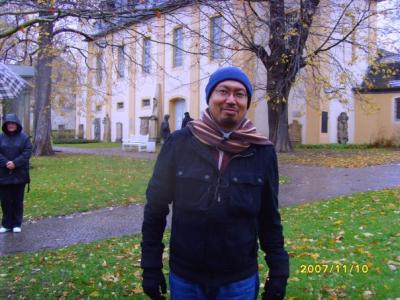
Picture-23

The concept

The concept from what it started is very simple. To make a blog in Javanese language is still very rare. Even though there are many Javanese speaking people that own a blog, it shows when they use Javanese expressions in their blog that is actually Indonesian, whether it is in postings, comments, or in a shoutbox.

And we did not intend to make a blog with a serious deiscussion about Javanese culture. We only wanted to speak about light things concerning traditions and culture of Java that we have experienced ourselves.

The original concept, when it was just in the form of idealistic ambition, was to help foster the Javanese culture so it would not be simply forgotten and so it’s values can still be benefitial for today’s way of life.

This is our mother tongue, our language in our environment. Part of our contributors actually don’t live in a Javanese language environment, but they are still Javanese that can still speak Javanese and understand Javanese culture up to a certain point.

And to make a blog in Javanese is something quite unique. A blog authors who want their blosg to get a lot of visitors, one of the requirements ist hat it needs to have a unique quiality, that makes it different to other blogs. Even though by making a blog in Javanese it limits the amount of visitors who will come, but never the less some of those visitors can be hoped to become regulars.

Padhang Mbulan menas moonlight. The name was inspired by a Javanese children’s playing song that it very famous that is also called ‚Padhang Bulan’. The song asks children to come play in the garden at the time of a bright moonlight. That fits to the concept of the blog that is like playing, to make light postings like a chat with neighbors while enjoying the moonlight.

The blog was started in 2005. But until now there are only 50 postings. Where 10 of them actually were written within the first month of the start.

In the beginning there were 9 contributors, it can be seen in the part "Ingkang Mbaurekso" : Eni, Isna, Kere Kemplu, Lantip, Nauval, Qyu, Rhay, Siberia, and Wisa (who wanted to be deleted because he stopped blogging). Then the last post her eis a writing that I received from another person, outside of the contributors. They sent a text via email to put it on the blog.

Bloggers often seem have that kind of ‘sickness’, enthusiastic and regularly posting when first owning a blog. But then when it has been running for a while they run out of ideas, don´t know any more what to write about, bored because they don’t feel any real value that could motivate them to keep on writing.

Some of the bloggers who were contributors at Padhang Mbulan totally stopped to blog. Maybe because of the reasons mentioned abbove, maybe other reasons.

Then there are others who still sometimes make a post in their private bog, who have just run out of ideas what to write in Padhang Mbulan. That includes myself!

Blogs and traditional culture


I do think it is important to document and make public all the cultures of Nusatengara. From the blog Padhang Mbulan I could increase my knowledge about Javanese culture in the area of yoygakarta, for example, that has subtle differences to the Javanese Culture at Malang, where I grew up.

By an easy approach and a simple language you can raise the interest of people to at least involve themselves by reading.

Benefits of blogging

The Indonesian people are a people that like to socialize a lot. They like to have many friends from various bckgroungs. And through a blog they can make many friends by visiting each other´s blog. Those that are trapped in a routine work everyday where you have to sit facing a computer for hours and hours need a momentary compensation that they can get without going far from their computer, and that´s blogging. They can make a posting about whatever and wait for the comments from their fellow blogger friends, or they can visit the blogs of their friends to leave a comment or simply say hello in the shoutbox.

I´m not a jounalist blogger that writes postings to make a comment on every current event in the real world. I also very rarely visit blogs commited to these topics. I prefer going straight to the website of the media that can be hod responsible, that write news as they happen without mixing in their personal opinions. So I can´t say much about what people say about that one day blogs will be a medium next to newspapers and television.

What I can predict is if all people get used to share an array of issues to the public via blogs, that could become a very huge source of knowledge. But it has to be pointed out that blogs have no filter that can choose between writing that is reliable and trustworthy and writing that is of low quality.

Friday, 11. July 2008

Off Tpoic: Olahraga Gado-Gado, Take 2!!

This is slightly off topic, but never mind!

When I first started my research on Indonesian blogs, I came across the Blog Jalan Sutera, authored by Mas Pujiono. I started reading it from time to time and found an entry from November 12th, about 'Olahraga Gado-Gado'. What Puji was talking about is the new mixed-sport discipline called chessboxing.

Well now the funny part is, that chessboxing was invented in Berlin, which happens to be my hometown at the moment. And the guy who invented it, Iepe Rubingh, a Dutchman, happens to be the artists I work for a lot as a designer! So you could say I've been a fan of chessboxing from the very beginning!

Just a few days ago, on July 5th, there was another big chessboxing event held in Berlin. There were three fights that evening. Two fights before the main fight: A German guy vs. a Polish guy and a British guy vs. an Italian. As you see, chessboxing is becoming quite international!

CBgianluca
Gianluca Sirci (IT) vs. Andrew Costello (GB), sweating over the chessboard

It's a sport where contestants have to be extremely fit both physically and mentally. The fight starts with a round of chess. This happens on a chessboard inside a boxing ring. The round of chess is three minutes long, after that time the chessboard is carried outside the ring and the boxing round begins. After the boxing round, the chessboard comes back into the ring and the chess game continues. All this happens extremely fast - the fighters have to switch between controlling their pumping hearts and adrenaline level to concentrating fully on a complex and fast chess game. It's not easy, let me tell you!

The main fight


CBWM20072
Frank Stoldt (GER) looking grim in the boxing round...

The German defender of the World Championship title, Frank Stoldt, fought against young Russian Newcomer Nikolay Sazhin. After a long streak of wins, because of his experience and excellent skills, Frank Stoldt was beaten by this 19-year old Russian talent. It was an awesome fight and showed that there is now a new generation of chessboxers awakening!

CB_Nikolay
...but finally having to admit defeat to super-talented youngster Nikolay Sarzhin from Siberia!

After the fight, I had a chat and a drink with the lucky winner Nikolay, and we came to the conclusion that it would be a nice idea to transform chessboxing into the true Triathlon of the 21st Century: Round of chess followed by round of boxing followed by round of vodka...

Saturday, 28. June 2008

PART 3 of the interview series: RADITYA DIKA - THE POP STAR

I met Raditya in a busy restaurant at CITOS in what must have been his lunch break. Between slurping down noodles and sipping ice tea, he told me a lot about his early days as a blogger and what has changed now he's, so to speak, a teen idol.

Raditya is one of those young people that really baffle me with their energy and spirit. Still in his early twens, he is considered and A-blogger, has written several bestselling novels, owns the publishing house Bukune, and is now directing a movie - about blogging.

raditya

Raditya Dika (center)


First contact with blogging

I always kept a diary when I was young. When I got into the whole internet thing, I started making personal websites. This was about 1999 and at that point I didn’t know about the term blogging. There wasn’t such a name back then.

I stumbled on the website of an Indonesian girl living in Canada. This site was about her, her personal stuff. I thought it was sooo cheesy, but then the next day, I had my own blog up at blogspot.

I worte about my stories in high school, my friends and stuff. Then I started writing about my crush in high school. Eventually I told her I liked her, and she said I know, I read your blog! I started to feel how powerful blogs are. She googled my name, and she found my blog. After that I started to shift from writing about girls and highschool to my family. I bought the domain kambingjantan.com and eventually told my family and friends about it. And then day by day, there were more followers, they told me my writing was funny… I never intended to be funny, but I began to do it consciously, to write jokes about my family, ordinary Indonesian’s lives or celebrities. I got the best Indonesian blog award in 2003, that gave me the confidence to bring my kambingjantan manuscript to the publisher. (in 2004)

I graduated in Adelaide in finance, now I’m studying at the University of Indonesia in politics, while working at Bukune publishing house. Before that I was at Metro TV for ‘Metro this morning’. No I don´t want to be just a writer. It’s just a habit for me. I just did it learning by doing.

In the beginning I write really sporadically. It was really bad. I was trying to get more and more attention by saying: I got a blog! I used a scandal (two celebrities who had something like a porno video) and wrote their names in the metatext of my blog. So when people searched on google, they stumbled upon my blog. That got my like 2000 unique visitors on one day and some of them read my stuff and liked it. And I also wrote graffiti kambingjantan.com everywhere. I found unconventional ways to promote my blog.

I usually blog at work now. Back then when I started I did it at home. At the time when I was in Adelaide I did it from my apartment. I usually have my notepad and a cellphone so I can take notes and develop them at home.

I use wordpress for my blog. I had someone else to develop it, to put all things into place. Before I started to blog I had a personal website. There I developed my own HTML code too. I did this in my first year at high school. I taught myself to do HTML. My technical background – I get it from books.

From blog to book

My blog kambinjantan was published as a book at GAGAS media in 2005. They were some chick lit publishing house. Very ABG.

The publisher didn’t know about blogs so I explained it to him. He said, this really sounds different, it sounds unique. Long story short, the book was published in 2005 and it became a great success.

I told him the blog has ineffective sentences, many abbreviations, it is really not written in good Bahasa Indonesia. But the publisher said, no let’s not do any editing, let’s take it as it is. Because blogs are a very different culture from writing novels. This way it will keep the soul of your blog.

And that was a predecessor for the whole book industry. Normally we have all these people, who look at the language, the formulas for good Bahasa Indonesia. People saw my book and said wow, this is really a breakthrough to all those limitations before. I wrote some expressions which have never been used in Indonesian language before, like ‘dick’. These words the young people use in their daily language but it has never been in literature before.

There was this whole huge wave of chick lit, teen’s love stories, and then I came out with kambingjantan, with this do-what-you-want/I-don’t-care-what-you-think attitude and it really hit in.

Dealing with success

Of course I follow the statistics. After I became a writer I stopped writing the blog for a while. It all of a sudden was a different feeling, like I was not writing for myself anymore, like I was writing so that other people would like it.

And after the second book came out, I started to change my whole paradigm. I started to think, ah this is really my competitive advantage. So I started to use it to market my books. So very very long in advance, I starred writing, you know, I’m working on my third book… I started posting funny videos, to get the buzz going… and then I had a preorder thing for my third book, preorder it before it actually comes out.

It became the number one bestseller of all time for GAGAS media and number two bestseller of all Indonesia (Kompas version). Since then I maintained my blog, but purely for that purpose. I get about 2000 unique readers a month. Page view itself, maybe 20 000. The sad thing is the more and more people read my blog, I have to pay more for maintenance… it passes beyond it’s bandwidth limits…

I don´t follow up all the comments anymore. I get so much feedback, also via email, it´s really too big for me too handle! and my friendster is really growing too. I pick one or two from the comments, to comment upon…

Some people buy my book because of the historical value of the book. You know, the first blog that was turned into a book in Indonesia! And you have people who say: oh I want to publish my blog like Raditya Dika did, and then others will ask, who is Radyita Dika?? And it just spreads from there…

Sometimes I write in my blog about my books, sometimes I take an idea from a blog. So it’s difficult to differentiate whether I’m a writer or a blogger. But people see me more as a writer, in the sense of someone who writes a book.

People who come to the tour, to the show of my book, are ABG people, mostly girls! I never thought my readers would be this young! On my blog it’s basically the same people. I don’t think there’s anyone over 30 who reads my book and blogs.

A whole new genre?

In a way I guess I’m inspiring people to blog, so I can get blogging to get bigger. I have been called upon to do seminars on blogging, that it can be profitable.

Gokil, Dr. Ngocol, Cacing Kepanasan, and there are two more blog books that I know of. It’s just business as usual. Especially Cacing Kepanasan, (also at Gagasmedia) also with an animal in the title, this was like ‘ do we have a Radit No. two here’? But I said ok, it’s good to have some competition. But after the book came out, it flopped.

And the same thing applies with other book blogs, the only thing that works was Dr. Ngocol. So they try the things that work and do it over again.

In my movie there are a couple of scenes which mention blogging. Some scenes where I’m writing a blog on the screen. It has one funny scene of a blogger’s gathering. Because the gatherings are a very popular thing for us to do.

My publishing company is trying to keep up with the pace of young people. I’m trying to integrate the whole young people hype into a much higher context. It’s called Bukune.

Indonesian blogging culture


Before my book got published, I spent more time reading others peoples’ blogs, commenting, but now not anymore… I feel like I’ve been left out a bit in the blogosphere these days. I don´t keep up with all the new stuff. When I go blogwalking I find really cool stuff. An elementary school kid writing about politics and stuff… a person writing from the perspective of his cat…

It is in our culture to exchange words. You can see people hanging out, we really like nongkrong, ngobrol, this is the basis of our culture, to be among other people. This is how blogs work, looking, leaving comments, interacting…

In Australia, people like to blog in live journal because they can keep it private.
In Indonesia, we really like chatting. Just passing information around. The mentality is: I write for other people.

I think blogging in other countries is not as much a hype as it is in Indonesia, I don’t know I really feel that way. I have been to Australia, and talked to friends from Singapore, from Malaysia, from Hong Kong, and it’s nothing like in Indonesia where you have these small groups of bloggers, alle connected. Here, when a bloggger says I’m coming to Yoygakarta, he will have a whole group of bloggers waiting for him at the airport. They will say, you’re my family now.

Mas Enda is my friend as well, he said he just forgot to invite me to Pesta Blogger!

I´m connected to BlogFam and Blogbugs. But I’m not much into Blogfam because Blogfam is more for mommies and dads. At one of their meetings I was like the youngest person there. Blogbug is a lot younger.

Ideas for the future

I think we have to get more space in traditional media. Maybe some columns based on blogs, some TV show based on blogs… I think we can exploit blogs in a much much more diverse way than just a person writing, and that’s it. Television could integrate Vlogs…

We should have international / Asian wide Blog gathering parties…

If Indonesian people write more in English, people from other countries can see Indonesia through our own eyes. This could eventually benefit Indonesia.

And also, blogging as a function of citizen journalism, could be a function of control to this already biased media. Like Metro TV, it is owned by Surya Palo who is big in Golkar, and TPI is owned by Suharto’s daughter… blogs are really the front line of citizen journalism, to control the news itself to create a second opinion.


Thanks Radit! Good luck with the shoot in Australia...

Monday, 16. June 2008

PART TWO of the interview series: ENDA NASUTION - THE FATHER

Although a father in real life, he seems a bit young to be dubbed 'the father' of the Indonesian blogosphere. Nevertheless, he has gained this reputation, simply by being among the first bloggers to get serious about it, and by actively encouraging and supporting the blogging community with his know-how. He was the Chairperson of last year´s Pesta Blogger

I chatted with Enda Nasution about blogging culture in general, the atmosphere of the Indonesian blogosphere and I got some insight on certain 'hot topics' of Indonesian bloggers... The following is a recap of our chat, Enda´s words grouped into thematic blocks and only with minor changes and shortenings.

enda


The benefits of blogging

I like the idea that blogs upset the current media industry’s status quo, that was the first thing that attracted me to blogging. Giving access and voices to millions of people where they can write and express themselves easily, fast and without significant cost is pretty great!

I like to think that by blogging we are promoting ideas of solidarity, being open minded, accountable and participative, young people especially should not sit and stand aside but now can be heard and read as well. They will become more empowered, more confidant, more opinionated. To do that people need to read a lot, learn a lot of things, think structurally and communicate well. Those are qualities that I find positive and we as Indonesian bloggers want to promote and spread this attitude.

You can't blog in a vacuum. it's connected to one another, the blogging community motivates each blogger to keep blogging.

Some people are concerned about the quality of the content of blogs which sometimes seems trivial and self absorbed but I think those concerns, even though they are valid, are secondary. The first thing is that people start blogging, the quality will improve as the bloggers are exposed to more quality writing. Of course we as community will help anywhere we can. it's like the open source movement: given enough bloggers, the whole community will rise up.

But to tell you the truth I was much more optimistic 2-3 years ago, not that I am losing all hopes, but I am more realistic now, maybe it's the old age creeping inside of me or something…

It depends on what to benchmark the progress of course, when asked whether bloggers will have a positive effect on the public I always say yes, on a personal level it promotes an attitude that I have mentioned before, which are positive things to have.


Internet users in Indonesia


I don't if techno-elite it's the correct term, but Indonesian internet users are better educated, have better income than the rest of non internet users. But in terms of profile, it consist of mostly male/female 18-28. With a rising number of even younger users

I was arguing on a piece on Jakarta Post in 2004 that this internet users act as influencer to the other non internet users, this was in context of the presidential election, my point was that the presidential campaign should pay attention to online more, or use online combined with on-ground volunteers.


Blogs and traditional media

Especially in Indonesia’s case there is a shortage of content from the online media. Here the number of topics covered online is limited, that's the hole that the bloggers have been filling in. On the other hand, the traditional media becomes an echo chamber of the blogosphere. Several times, magazines or newspapers copy paste word for word a blog post and publish it. Others use blogs as source of information. There are even plans to discuss blog posts on a radio program, giving a different twist on the whole new media - old media debate.

The only new media, purely online is detik.com. The other online media is the online version of traditional online media, like Kompas and Tempo. So I think the more correct term will be mainstream media vs. alternative media. The mainstream media all realize the power of blogs, their take on that is to create their brand of blogs. So wait for kompasblog.com, detikblog.com, tempoblog.com. It's coming.

But traditional media are often struggling with the web 2.0 world, because the internal push-pull interest inside. I think, most of their efforts online will stumble as well. They view online as another distraction with time and effort to put in.

The Indonesian example of citizen journalism is wikimu.com. It is overlapping, the Indonesian wikipedians, Indonesian bloggers and people who wrote in wikimu, but somehow i think each are different breeds.

Bapak Blog Indonesia?


All i did was to blog, quite at the beginning but I was not the first one. And I wrote an article to explained what blogging is, which became popular and is still referred to by people who want to know about blogging. I think it was started as a joke, not a serious/real position, nobody elected me or anything, but then it was picked up by mainstream media, and there I am. Especially after chairing Pesta Blogger in October last year. People and journalists will ask me: what's next and what do you see for the Indonesian blogosphere in the future etc.

The climate of the Indonesian Blogosphere

Malaysia, Singapore, Vietnam, Cambodia… I was on a conference in Manila discussing free expression in cyberspace and it was clear that Indonesia is one of the countries where we currently enjoy freedom of expression.

But then again, intimidation and repression can take many forms and can come from many groups in public. There is already a case of a blogger from Yogyakara threatened by a lawsuit and ordered to take down his post by a kyai (muslim religious leader) in Jakarta. The blogger took down his post, even though the threat was baseless. His post was not in any way directed to the kyai. But the blogger took down his post anyway.

In the near future I expect there will be more vertical and horizontal conflict in the Indonesian blogosphere, vs. mainstream media, vs. other parts of the public.
Right now I think we are still in honeymoon, everything handy dandy…

The atmosphere here is very communal, Indonesians love to chit chat and hang out together, and that has now translated to online behavior too.

Bloggers, friends and ‘enemies’


From what Mohammad Nuh says, his perspective on blogging was that it's a positive activity, for the youth especially, and he said that anything positive, especially for the youth should be supported because the future of a nation depends on it's youth.

Roy Suryo I think holds a grudge against the Indonesian blogger community. He seeks attention from the media and positioned himself as an expert in IT and the telecommunication industry, where in fact he really doesn't know that much about both subjects. I think the blogosphere does have an impact on RS image, journalists are now more reluctant to ask him for his opinion, especially for important stuff, but on the celebrity gossip he still appears from time to time.

Kampung Gajah is just an inside joke that we have, but it’s because a lot of figures in the Indonesian blogosphere are members there. So flow of information sometimes starts there and is shared to the groups, or vice versa.


Thanks Enda!

Wednesday, 11. June 2008

I´m back. I promise. And a treat to beigin with: Recap of my chat with Wimar Witoelar


Oh dear boys and girls, not sure if you will still talk to me after this long hiatus. I´m not going to go into the details of why but I´m determined to go ahead with some fun stuff from now on.

Do you remember my teaser post a while back. Well I am now finally starting to put short versions of the information I got by chatting to some Indonesian bloggers online. (I transcribed the recording, then shortened and grouped the information into thematic blocks. I tried to stick to the original text as much as I could.) The interviews/chats all took place in January/Febuary 2008.

To me the blogosphere seems like a big family clan, where there are dominant and influential figures, some outsiders, moderators, provocateurs and so on. Following this logic, let´s start with someone who sees himself as the mascot of the Indonesian blogosphere....

PART ONE: WIMAR WITOELAR - THE MASCOT

wimar_banner

Perspetif online

On my blog, ideas are discussed seriously, but in a popular manner. People like how I present things on Television or in my articles, so we also present it that way in our blog. It is a multimedia enterprise.

In 1993 I got an invitation to do television talk show. In ‘94 it got banned by Suharto, but because of that it became more popular and so we went to the radio an on to live stage shows. The radio show is still going on until now. Broadcasting on 150 stations around the country. We are very strong in that area, we have won awards, for television and radio. The online version, perspektif online actually came as an afterthought, ‘just for fun’. But we are consistent, even in the way we have fun, we take things seriously. It is also very recognizable. I have a logo that appears everywhere. We have T-Shirts. It is very branded. But everybody knows we are serious. When Suharto was ill, the foreign press quoted what I wrote. I think we appeal to a lot of people.

Everything that is said in the TV show can be discussed on the radio, on the internet or newspaper articles. It cycles. So to me, there is not so much difference between the traditional media and the electronic media. I appear all over. Kompas or other newspapers like that find it difficult to adapt to web 2.0. Their websites are more or less internet depictions of the print versions.

Everything we have is interactive, everything we write depends on collective intelligence and everything we write is connected to our social networks. We did the web 2.0 thing even before I knew the definition.

The internet is a people’s movement. Our site got most hits during the election campaign for the governor of Jakarta.

My show ‘Our Governor’ got taken off air because the governor didn’t like it. I then moved the issues to the blog and the discussion continued over there.

When we started the blog I didn’t even know what a blog was. We just tinkered around with it. I am an internet person since the very beginning, by training I am a computer scientist. But I am a practitioner not an expert. I don’t know the statistics.

Up until now, we don’t make money with this. We have a professional PR company, where we make our money.

Indonesian Blogoshphere

I’m on the steering committee of Blogger Indonesia. I am their mascot because they say I am the oldest blogger and I am also the most visible. Otherwise others wouldn’t know what blogs are. I was Invited to be part of the show, but Enda Nasution, Ong Hock Chuan, Budi Putra, Priyadi, Wicaksono, that is the true committee. And of course Shinta of bubu.com

The internet in Indonesia is not only for a tech-savvy elite but for eager communicators. If they want to speak out, and know that they can do so, someone will lead the to blog. Someone will give them access to computers. It is not based on technology per se, but on the desire to communicate. Young people are bloggers, members of friendster or facebook. The techno-savvy are more like consultants, there are a few of them that spread the word. Then it goes from mouth to mouth. The bloggers are not techno savvy. They are curhat - people. (people who like to express their feelings) there is a small circle of techno savvy who think up innovations in blogging, who discuss where it’s going, but they are not the persons who drive the traffic of blogs. Most people who blog know nothing about the internet or computers, they write very well or take photographs…

I think Indonesia has a pent up capacity for writing. When Suharto went away this came to the surface. There was a surplus of magazines. In Suharto’s times to publish a magazine, you had to pay a lot for a license.

The role of the internet during the student’s movement


I can point our several links between the internet and Suhartos downfall Yes, mailing lists and emails were important. I was a student activist also in the 60ies, as well as in the 90ies. In ‘98 at the time of students’ movement the internet proved as an excellent tool to mobilize. We could show up with 500 000 people in no time. Perspektif online was actually based on a strong mailing list, and it is still now.

Secondly and more specifically, the internet proved to be a powerful tool in reporting. Newspapers quickly lost track of the movement but it had news portals, specifically detik.com. It single handedly created the revolution in internet publishing. 6 reporters tried their hand at making a website. And because they appeared at the time of the internet boom, it quickly developed from a 6 person project in the basement of a stadium into a company with a high market value t at one time. And then it dropped again. They have been left behind by citizen journalism. They are not bloggers. Now they have a 400 people company that does advertising etc.

The internet has always been at the core of anything that is new in communication. If you look at political movements you will find out Partei Keadilan Sejahtera (PKS) was almost built up on the internet. I admire their use of the new medium. So certainly it is part of the reform and people of the establishment don’t quite know how to deal with it.

The role of the government in the development of internet access and computer literacy

With all due respect to Pak Habibie and Minister Nuh because I know them both, they have no role at all in the development of the internet. Habibie is an expert designer of airplanes. He is a man of the past generation. Habibie was never available via emails. Gus Dur on the other hand is.

The Habibie Center is a very political group. A group of intellectuals to continue the dialogue and of course they raise technology issues. But being involved in technology issues is very different to hacking around on a computer. They talk about it but I don’t think they do anything.

Mohammad Nuh is a nice person who was lifted from being director the 10th of September Institute of Technology , very old school. He doesn’t understand the internet either. In fact when he declared the Hari Blogger, he was doing an illegal act because you cannot declare a national holiday without the consent of the parliament. But he is a nice guy and well, don’t take it too seriously. As long as he comes and makes us feel good. He provided a prize. I always say when you want to do something well do it without the help of the government. It only constrains you more.

The internet infrastructure is provided by Telkom. The ministry is just hanging on and looking at it. They’re supposed to take the initiative but they’re not. The ministry is basically a political organization to accommodate people who had nothing to do after the ministry of information was disbanded. When we had the Department of Information under Harmoko it issued permits for newspapers and controlled the media. President Wahid abolished it because it was unnecessary and also authoritarian. But being in a hurry he didn’t realize that he put thousands of people out of a job. And when Megawati came along she decided ok, let’s call it informatics instead of information because the people are allergic to everything related to mind control. Let it deal with information technology. But they didn’t understand it at all! Maybe it’s gotten better now….


Thanks very much Pak Witoelar for giving this in depth insight and as always, sharing your opinion and being open for discussion!

About me

me

Born on September 20th, 1979 in Cilegon, a small city close to Jakarta, I spent most of my childhood years Indonesia. After graduating from Jakarta International School in 1997, I moved to Germany. Here, I went from doing a 2 year course in media design to studying communication science and cultural studies the University of the Arts, Berlin. I work as freelance designer, translator, and assistant to Dutch artist IEPE.

contact me here:

mail (at) texastee.de
twitter: texastee

Users Status

You are not logged in.

Search


Status

Online for 443 days
Last update: 23. Jul, 12:37

Credits

Knallgrau New Media Solutions - Web Agentur für neue Medien

powered by Antville powered by Helma


xml version of this page
xml version of this page (with comments)

twoday.net AGB


about this blog
Bandung
facts and figures
interviews
my research
off topic
people and projects
related articles
thoughts and theories
Profil
Logout
Subscribe Weblog